 16 Jun, 2022
The Case for Stopping the Ukraine-Russia War
The Ukraine-Russia war has raged for more than a hundred days. Now is a critical time to reflect on the case for people of good will to urge their leaders to end the war...
16 Jun, 2022
The Ukraine-Russia war has raged for more than a hundred days. Now is a critical time to reflect on the case for people of good will to urge their leaders to end the war...
According to a study by a number of organizations called Ceres 2020, which was backed by the government of Germany, world hunger could mostly be ended by 2030 for $330 billion...
 4 Jun, 2022
America is awash with weapons, and the tragic consequences are before us every day...
 29 May, 2022
Welcome, children, to the world we so-called adults are handing over to you—a planetary culture of lies and power...
Secretary of Defense Lloyd Austin declared that he wants Russia weakened. Of course he meant militarily weakened.
Although great empires rank among the most powerful engines of world history, they are also among the most dangerous, especially as they brood over their decline.
 1 May, 2022
A principal lesson of the war in Ukraine is that the Cold War never ended. German reunification, the Soviet Union’s collapse, new entries in NATO, democratic springs in Poland and Hungary, Ukraine’s independence, the removal of nuclear weapons from eastern Europe, including Ukraine—all these events once augured a new era in Europe.
 20 Apr, 2022
On Monday, the Pentagon announced the US will soon begin training the Ukrainian military in using howitzer artillery in an unnamed country. Presumably this will be in a NATO member state. If Russian intelligence found out where, might it attack to stop the howitzers from being deployed against Russian forces in Ukraine?
There’s been a lot of “whataboutism” muddying the dialogue around the deeper causes of the cruel and pointless Ukraine invasion.
 21 Mar, 2022
The ghastly blockade and bombardment of Yemen, led by Saudi Arabia and the United Arab Emirates, is now entering its eighth year.
One of the more interesting developments in Putin’s war on Ukraine is the retreat of China from full-fledged support of Russia.
 9 Mar, 2022
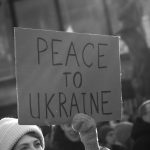
A key factor that explains Vladimir Putin’s military invasion of Ukraine is traditional Russian imperialism.
 8 Mar, 2022
Our headlines: “Defiant Zelensky reveals his location in Kyiv… asks for no-fly zone”, “Russia threatens Europe’s gas supplies,” "Biden threatens to cut off Russian oil.”
 7 Mar, 2022
I teach nonviolence. Students ask, so, okay, and just how could Ukraine possibly resist Putin and a brutal invasion using nothing but nonviolence?
 4 Mar, 2022
The frailty of peace in the midst of war by Robert C. Koehler 857 words Prior to any analysis of...
