A Cry for Moral Courage in a Wounded World
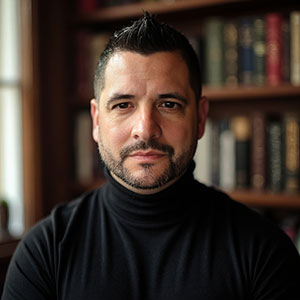
by George Cassidy Payne
1059 words
Every major spiritual and moral tradition carries a similar invitation: Treat others as you wish to be treated. Love your neighbor. Protect the vulnerable. Refuse unnecessary suffering.
It is remarkable that across continents, centuries, and cultures, humanity has repeatedly arrived at this same moral insight. Jesus called it the fulfillment of the Law and the Prophets. Rabbi Hillel described it as the essence of the Torah. The Prophet Muhammad taught that faith is incomplete until we desire for others what we desire for ourselves. The Buddha urged compassion toward all beings. The Mahabharata placed duty in the recognition that we should not do to others what we would reject for ourselves. Bahá’u’lláh, the Haudenosaunee, Humanists, Taoist sages, and countless others have expressed this truth in their own languages.
The world’s traditions disagree about many things. On this, they are remarkably united.
Which makes our failures so painful.
The purpose of shame, at its highest expression, is not humiliation. It is awakening. It is the painful recognition that we have violated something we already know to be true.
Shame, when transformed by compassion, can become a doorway. A doorway from denial to responsibility. From silence to solidarity. From harm toward healing.
If that is true, then shame belongs wherever human beings forget the sacredness of one another.
Shame on those who target civilians, whether through terrorism, warfare, or collective punishment. Shame on Hamas for murdering innocent people, taking hostages, and terrorizing communities. Shame on the Israeli government when military actions devastate civilian populations and innocent lives are treated as acceptable costs of conflict. No historical grievance, political objective, or religious claim can sanctify the destruction of innocent life.
Every child killed is a wound against our shared humanity. Every family torn apart is a tragedy that should awaken our conscience. Peace begins when we refuse to explain away the suffering of others. Shame belongs wherever faith is separated from compassion.
Shame on those who invoke God while ignoring the suffering of their neighbors. Shame on religious institutions that preach salvation while remaining silent in the face of hunger, violence, poverty, and oppression. Jesus did not separate love of God from love of neighbor. The world’s great traditions repeatedly remind us that spirituality without compassion becomes empty ritual.
Peace is not merely a belief. Peace is a practice. Shame belongs wherever nationalism becomes more important than human dignity.
Governments that persecute minorities, silence dissent, exploit workers, or manipulate fear for political gain betray the very people they claim to serve. Whether in China, India, the United States, Russia, Sudan, Myanmar, or anywhere else, human suffering cannot be justified because it advances the interests of the powerful.
The measure of a society is not how it treats those who hold power. It is how it treats those who do not. Shame belongs wherever wealth is built upon exploitation.
What should we call a world where children mine the resources needed for our technology while receiving little benefit from the wealth created? What should we call an economy where luxury exists beside homelessness, where food is wasted while families go hungry, and where human dignity is measured by economic value?
The prophets already gave us the answer.
Injustice.
A peaceful world cannot be built on the suffering of the vulnerable.
Shame also belongs wherever we forget our relationship with the earth.
The Haudenosaunee teach us to consider the seventh generation, asking us to look beyond immediate gain and toward the responsibilities we hold for those who will inherit the world we leave behind.
Climate change is not merely an environmental crisis. It is a moral question. Do we love children we will never meet? Do we recognize that the earth is not simply a possession, but a relationship? Do we have the humility to understand that our choices today become the inheritance of tomorrow?
Writers, artists, and spiritual leaders have long challenged humanity to awaken.
James Baldwin believed that any meaningful understanding of God should make us “larger, freer, and more loving.” Toni Morrison reminded us that art carries moral responsibility. James Cone taught that the cross stands as God’s judgment against systems of domination. Gustavo Gutiérrez asked those who claim solidarity with the poor a haunting question: “What are their names?”
These voices remind us that justice is not an abstraction. It has faces. It has names. It has stories.
And what of us? It is easy to condemn presidents, generals, billionaires, and institutions. It is harder to examine the ways we have become comfortable with suffering that does not directly touch our own lives. Have we mistaken neutrality for wisdom? Have we confused convenience with peace? Have we learned to scroll past grief rather than enter into it?
Desmond Tutu warned that neutrality in situations of injustice sides with the oppressor. Audre Lorde reminded us that silence does not protect us. Their words remain relevant because indifference continues to be one of history’s greatest allies of oppression.
But shame is not the final word. The great prophets did not expose injustice simply to condemn humanity. They did so because they believed transformation was possible.
Repentance was possible. Repair was possible. Reconciliation was possible.
This is the heart of peacebuilding. Accountability without compassion becomes punishment. Compassion without accountability becomes avoidance. True peace requires both.
Every great moral tradition points beyond guilt toward responsibility. Beyond confession lies repair. Beyond repentance lies reconciliation. Beyond justice lies peace.
The question before humanity is not whether we possess enough moral wisdom. We do. Our sacred texts have spoken. Our poets have spoken. Our ancestors have spoken. The suffering of our neighbors is speaking still.
The question is whether we will listen.
The work of peace begins when we recognize that the stranger is not separate from us. It begins when another person’s suffering becomes our concern. It begins when we understand that justice is not the enemy of peace. Justice is the foundation upon which peace stands.
The world does not need more people who simply condemn injustice. It needs people willing to transform themselves in response to it. People willing to choose compassion over hatred. Courage over indifference. Connection over division.
The prayer that remains is not simply that God would change the world. It is that God would first change us. Because peace is not something we wait for.
Peace is something we practice.
~~~~~
George Cassidy Payne, syndicated by PeaceVoice, is a Rochester-based writer whose work sits at the intersection of politics, ethics, and lived experience. A poet, philosopher, and 988 crisis counselor, he covers issues of democracy, justice, and community resilience.
peacevoice