A New Threshold of American Shame
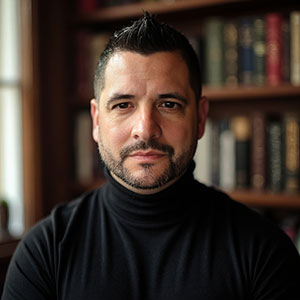
by George Cassidy Payne
1778 words
I am tired of writing about Donald Trump.
I have spent years writing about this man, and lately I find myself wondering what more there is to say. Another lie, another attack on an institution, another spectacle designed to keep everyone looking in his direction. The words come easily enough. That may be part of the problem. I can sit down to write about Trump and almost anticipate the sentences before I type them.
An editor at City Watch LA recently told me he was no longer interested in receiving Trump pieces. Readers tune out, he explained. I understood what he meant. There is only so much outrage a reader can absorb before it becomes background noise. I have felt that fatigue myself.
Still, the news from October 3 through 10 has been difficult to leave alone.
During that week, the Trump administration imposed sanctions on the International Criminal Court, announced plans to livestream a military execution, and struck a deal to obtain diesel from Russia. Each story deserves attention on its own. Taken together, they left me with the sense that we had crossed another threshold, one that deserves more than the usual round of denunciations.
The damage to American democratic norms did not begin this week. Neither did the administration’s contempt for international institutions or its willingness to treat political power as a personal possession. What troubles me is how little effort now seems necessary to reconcile these actions with the principles the government claims to uphold.
Consider the sequence. A former international human rights judge receives the Nobel Peace Prize. The administration moves against the court on which she once served. The Pentagon prepares to broadcast the execution of a convicted mass murderer. Meanwhile, the president announces an agreement to buy fuel from the Russian government, despite his administration’s recent efforts to pressure Moscow over its invasion of Ukraine.
There is something dispiriting about watching these contradictions arrive as ordinary news. We read them, register our disapproval, and move on to the next item.
Navi Pillay is 85. Born in South Africa during apartheid, she built a legal career challenging a system that denied the majority population basic rights. Nelson Mandela nominated her to South Africa’s High Court, making her the first nonwhite woman to serve on it. She later became a judge at the International Criminal Tribunal for Rwanda, where her work helped establish sexual violence as an instrument of genocide under international law.
More recently, Pillay led a United Nations commission that concluded Israel had committed genocide against Palestinians in Gaza. Israel has rejected that finding. The Nobel Committee cited her human rights work, including her role in the commission’s investigation.
Donald Trump responded by resharing a social media post claiming he deserved the prize. Hours later, his administration imposed sanctions on the International Criminal Court, where Pillay had also served as a judge, accusing the institution of unfairly targeting Americans.
The timing does not, by itself, establish that the Nobel decision prompted the sanctions. The larger issue is what the sanctions mean for an institution charged with investigating grave international crimes, particularly when the people or governments under scrutiny possess considerable political power.
International courts are not infallible. Their findings can be challenged, their jurisdiction disputed, and their procedures examined. None of that requires a government to accept every ruling. But there is a considerable difference between challenging a court’s work and using the power of the American government to punish it.
The United States has long expected other countries to answer for human rights abuses. That expectation becomes harder to defend when Washington treats international scrutiny as an offense in itself.
Martin Luther King Jr. wrote in his 1963 Letter from Birmingham Jail, “Injustice anywhere is a threat to justice everywhere.” He was writing about segregation and the people who found reasons to postpone justice for Black Americans. His words have a particular resonance when a government objects to the very idea that its conduct might be judged by standards beyond its own control.
The question is whether sovereignty has become a convenient shield against scrutiny, invoked most forcefully when accountability threatens the powerful.
Nidal Malik Hasan murdered 13 people and wounded 32 others at Fort Hood in 2009. The victims and their families should not be lost in the political argument that has followed the announcement of his scheduled execution.
Hasan, a former Army psychiatrist, is scheduled to be executed by firing squad on December 3. The Pentagon has announced plans to livestream the execution. If carried out, it would be the first public broadcast of a U.S. military execution and the first military execution by firing squad since 1945.
The government may argue that making an execution public will deter violent crime. That is a claim to be examined, not accepted simply because the punishment is severe. There is a difference between carrying out a sentence and inviting the public to watch someone die.
Capital punishment already raises difficult questions about the state’s authority to take a human life. Broadcasting an execution adds another question: What does the government hope to accomplish by turning the act into a public event?
Albert Camus addressed the problem in his essay Reflections on the Guillotine, published in 1957. “Capital punishment is the most premeditated of murders,” he wrote.
Camus was not asking us to forget the victims of murder or to pretend that violent crimes do not demand serious consequences. He was questioning the assumption that the state’s decision to kill becomes morally uncomplicated once it has passed through a legal process.
A military execution is an exercise of state power. A televised execution would also be a message to an audience.
The United States abandoned public executions long ago. The last widely recognized public execution in the country took place in Kentucky in 1936, when a crowd of roughly 20,000 gathered to watch the hanging of a Black man convicted of raping a white woman.
We have spent generations debating what punishment should accomplish and what limits a civilized society should place on its own violence. The proposed broadcast raises the possibility that we are moving backward on a question we once thought settled.
The horror of Hasan’s crime does not answer that question. Neither does the government’s authority to impose a lawful sentence. The public deserves to know why watching an execution is supposed to make us safer, and what evidence supports that claim.
The third story seems almost mundane beside the first two. Fuel prices are high, the administration wants relief, and Russia has diesel to sell.
Trump announced that Russia would immediately supply more than 300,000 tons of diesel, with millions more tons to follow. The reported average price of diesel had reached $6.28 per gallon. Less than a month earlier, Trump had signed a sanctions bill intended to increase pressure on Moscow over its invasion of Ukraine.
There are practical questions to ask about the agreement. What are its terms? How much could it reduce American fuel costs? What effect might it have on the broader effort to pressure Russia? An announced shipment is not the same as fuel delivered, and the public should be able to judge the agreement on its actual results.
Negotiating with an adversary is not inherently wrong. Governments have to weigh competing interests, and energy prices affect people who cannot afford to wait for an elegant foreign policy to produce results. A president has a responsibility to address those concerns.
But the administration also has a responsibility to explain how this deal fits its stated objectives. If economic pressure is supposed to persuade Moscow to change its conduct, what happens when Washington turns around and purchases a major energy supply from Russia? Can the two policies be reconciled? If so, how?
The agreement may have an economic rationale, but that does not make the contradiction disappear.
For Ukrainians living under the consequences of Russia’s invasion, this concerns the credibility of American commitments. For Americans struggling with fuel costs, the question is whether the agreement will deliver the relief promised. Both deserve answers.
What is missing from the announcement is a convincing account of how the immediate economic benefit, if there is one, relates to the administration’s longer-term strategy. The public should not have to assemble that explanation from presidential boasts and fragments of news coverage.
I hesitate to call any single week a turning point. American history contains too many grave injustices for that kind of claim to come easily. The country has survived slavery, segregation, political repression, and wars justified by falsehoods.
But history is not an excuse for complacency. The fact that we have endured worse does not mean we should accept what is happening now.
The three stories considered here are different, and their differences matter. Sanctions against an international court are not the same as a proposed televised execution. An energy agreement with Russia is not, on its own, evidence of a betrayal of Ukraine. Each requires its own facts and its own judgment.
What connects them is the apparent ease with which the administration moves between incompatible positions. International accountability becomes an affront when it threatens American interests. An execution becomes a potential public broadcast. Pressure on Russia gives way to a deal for Russian fuel when domestic prices become politically urgent.
I keep returning to the question of what we are being asked to accept as normal.
The danger is not that every American will approve of these decisions. Many will oppose them, and others will defend them on their merits. The danger is that the sheer volume of controversy leaves too little room to examine any one decision carefully. By the time we have begun to understand the consequences of one announcement, another has arrived to take its place.
The desire to look away can become its own kind of accommodation. If the stories that matter most are the ones we eventually stop discussing, then exhaustion has consequences beyond the private frustration of a writer.
I do not expect this article to change the administration’s course. What matters is whether we can still distinguish between a political controversy and a genuine test of our public principles, between the familiar spectacle and the decisions that reveal something about the country we are becoming.
The Nobel Prize, the execution announcement, and the diesel agreement may ultimately be remembered as separate episodes. For now, they offer a glimpse of a government willing to put its own immediate interests ahead of the principles it invokes when convenient.
That demands our attention, our judgment, and a willingness to ask what we are prepared to accept in the name of power.
~~~~~
George Cassidy Payne, syndicated by PeaceVoice, is a Rochester-based writer whose work sits at the intersection of politics, ethics, and lived experience. A poet, philosopher, and 988 crisis counselor, he covers issues of democracy, justice, and community resilience.
peacevoice