The Constitution Cannot Defend Democracy by Itself
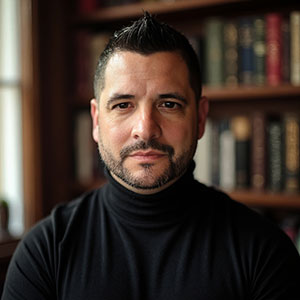
by George Cassidy Payne
963 words
Hamilton believed American institutions could restrain political ambition. Today, the survival of democratic government depends on something the Constitution cannot guarantee: the courage to resist abuses of power without abandoning the principles of peace
When Alexander Hamilton defended the proposed Constitution in 1788, he worried about the dangers of political ambition and leaders who might exploit public passions for personal advancement. In Federalist No. 68, he defended the Electoral College as a safeguard against the election of an unqualified or manipulative president. He envisioned a process in which electors would exercise independent judgment, choosing someone distinguished by “ability and virtue” rather than political celebrity or the “little arts of popularity.”
More than two centuries later, the American presidency has exposed the limitations of that vision. Donald Trump’s two presidential victories have demonstrated that constitutional structures alone cannot protect a republic from the concentration of political power. The Constitution distributes authority among competing branches of government, but it cannot compel those branches to exercise their independence. It cannot make political parties value democratic principles over partisan advantage, or require public officials to defend institutions when doing so becomes politically inconvenient.
This is a problem of political culture and the conditions necessary for a peaceful society.
Hamilton understood that ambition was a permanent feature of political life. In Federalist No. 70, he argued for an energetic executive, but he also insisted that presidential authority must remain dependent on the people and accountable to them. The presidency was intended to be an office of public trust, not a personal possession. An election confers authority, but it does not confer ownership of the government.
A functioning democracy requires institutions capable of resisting political pressure, including when that pressure comes from the highest office in the country. Congress must exercise oversight. Courts must remain independent. Election officials must administer elections without intimidation. Public servants must be able to fulfill their legal responsibilities without fear of political retaliation. Journalists must be free to investigate and criticize those who govern.
The press is imperfect. Journalists deserve scrutiny and accountability. But the independence of journalism is essential to the public’s ability to make informed decisions. When government access depends on editorial compliance, the public loses something more consequential than a reporter’s seat in a briefing room.
The same principle applies to political opposition. Disagreement is not disloyalty. Criticism of government is not a rejection of democracy. A society that treats dissent as an enemy action gradually loses the capacity to resolve its differences through peaceful means.
This is where constitutional reform and the work of peacebuilding find common ground. Peace is not simply the absence of war or public disorder; it requires institutions that can mediate conflict without resorting to coercion, and leaders who understand that political opponents remain members of the same civic community.
Nonviolence, moreover, does not mean passivity in the face of injustice. The traditions of countless grassroots movements demonstrate that organized, principled resistance can confront abuses of power without reproducing the violence it seeks to overcome. Nonviolent action requires discipline and a willingness to hold institutions accountable. Those principles have practical implications for American democracy.
First, the Electoral College deserves serious reconsideration. Hamilton’s proposed safeguard no longer operates as he envisioned. Presidential electors generally function as representatives of party outcomes rather than independent deliberators. A constitutional amendment establishing direct popular election would ensure that every presidential vote by every individual voter carries equal weight. The National Popular Vote Interstate Compact offers another possible approach. As of November 2026, participating jurisdictions represent 222 electoral votes, short of the 270 required for the agreement to take effect. The National Conference of State Legislatures tracks its progress.
Second, Congress must reclaim its constitutional responsibilities. Oversight should not depend on which party occupies the White House. Emergency powers require meaningful limits, and executive actions affecting fundamental rights must receive serious legislative and judicial scrutiny.
Third, the independence of the press, civil service and election administration must be protected. Government should never use public authority to punish lawful criticism or reward political obedience. Transparent standards and meaningful accountability are necessary to maintain public confidence.
Finally, the country needs a deeper commitment to civic education and democratic participation. Citizens should understand not only how government works, but why its institutions must remain independent. They should learn how to disagree constructively, recognize political intimidation, distinguish criticism from hostility, and participate in public life without surrendering their humanity to partisan identity.
None of these measures will eliminate political extremism or guarantee wise leadership. No constitutional amendment can manufacture integrity. Just as no electoral arrangement can substitute for the willingness of ordinary people to defend the rights of those with whom they disagree.
Hamilton was not a modern democrat, and his political assumptions reflected the limitations of his century. Yet he understood something that remains relevant: political ambition must be restrained by institutions and public responsibility. His confidence in those institutional safeguards deserves closer examination. The American system depends on people who are willing to place constitutional duty above personal advancement and democratic responsibility above partisan loyalty. When that commitment weakens, even carefully designed institutions become vulnerable.
The answer cannot be to abandon democratic institutions or meet political intimidation with intimidation of our own. It must be to strengthen the structures that protect peaceful disagreement and restore the idea that government exists to serve the public. The Constitution cannot defend itself. Neither can democracy survive through the courts, Congress or the press alone. Its preservation requires a public willing to defend the rights of others, including those whose beliefs and political choices it finds deeply troubling.
It bears repeating. A republic is not held together by agreement, but by a shared commitment to resolving disagreements without stripping one another of dignity or belonging.
Yes, The Founders left us a framework. But the unfinished work is ours: to build a political culture in which power remains accountable and the pursuit of justice does not become another justification for coercion.
That is the work of peace.
~~~~~
George Cassidy Payne, M.A., M.T.S., syndicated by PeaceVoice, is a Rochester-based writer whose work sits at the intersection of politics, ethics, and lived experience. A poet, philosopher, and 988 crisis counselor, he covers issues of democracy, justice, and community resilience.
peacevoice